
-
Professional Power Flushing Remove sludge, debris and corrosion from your central heating system
-
Checkatrade Approved Rating of 9.8/10 with 300 customer reviews
-
Experienced Heating Engineers Professional heating and plumbing services since 2013
Professional Power Flushing
Central heating system cleaning by experienced engineers
Experienced Heating & Plumbing Engineers



Professional Power Flushing
Over time, central heating systems can accumulate sludge, rust and other debris inside radiators and pipework. This can restrict circulation, reduce heating performance and contribute to cold spots, noisy radiators and unnecessary strain on your boiler.
Whitfield Plumbing, Heating & Cooling provides professional power flushing to help clean central heating systems, remove accumulated contamination and restore effective circulation.
Established in 2013, Whitfield is a family-run heating and plumbing company providing professional heating services to homeowners and businesses.
Does your heating system need a power flush?
A power flush may be recommended when sludge and debris have built up within a central heating system and are affecting its performance.
Common signs can include radiators that are cold at the bottom, some radiators taking much longer to heat than others, discoloured water when radiators are bled, noisy pipework or repeated circulation problems.
Sludge can restrict the movement of heated water through your system, meaning your boiler and pump may need to work harder to heat the property effectively.
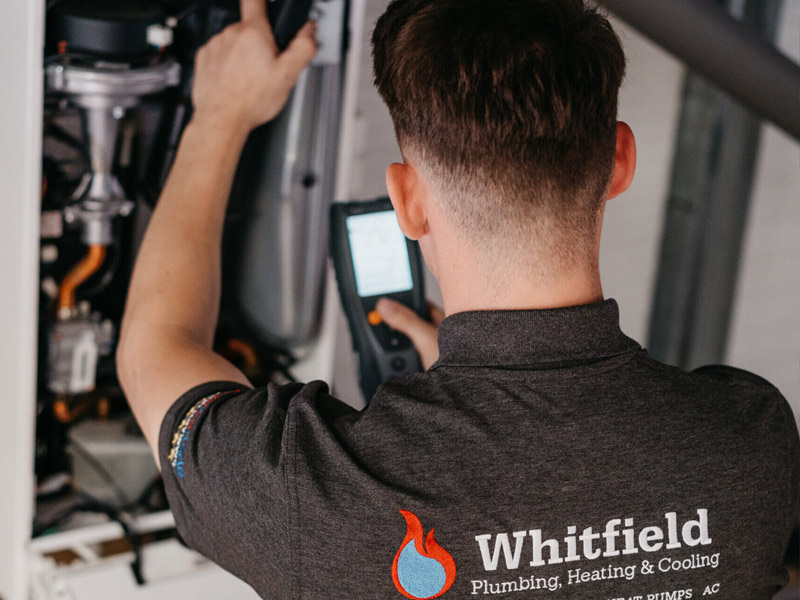
Our engineers can assess your heating system and determine whether power flushing is appropriate, rather than recommending unnecessary work.
What are the signs of sludge in your heating system?
Heating system contamination can develop gradually, so the symptoms are not always immediately obvious. Some of the most common signs include:
- Cold areas on radiators: particularly radiators that remain cold at the bottom while the top becomes warm.
- Slow or uneven heating: some rooms or radiators may take noticeably longer to heat than others.
- Discoloured radiator water: dark or dirty water can indicate corrosion products and sludge within the system.
- Noisy heating system: restricted circulation can contribute to unusual noises from the boiler, pump, pipes or radiators.
- Repeated circulation problems: persistent issues with pumps, valves or radiators can sometimes be related to contamination within the system.
These symptoms do not automatically mean that a power flush is required, which is why we recommend having the system assessed before deciding on the appropriate treatment.
What does a power flush do?
A power flush is designed to clean contamination from a wet central heating system by circulating water and specialist cleaning chemicals through the radiators and pipework.
The process helps loosen and remove accumulated sludge, rust and debris that may be restricting circulation within the system.
Once the system has been cleaned, it is thoroughly flushed and treated with an appropriate inhibitor to help protect against future corrosion.
A properly cleaned system can improve circulation and help radiators heat more evenly where sludge has been responsible for poor performance.
What happens during a power flush?
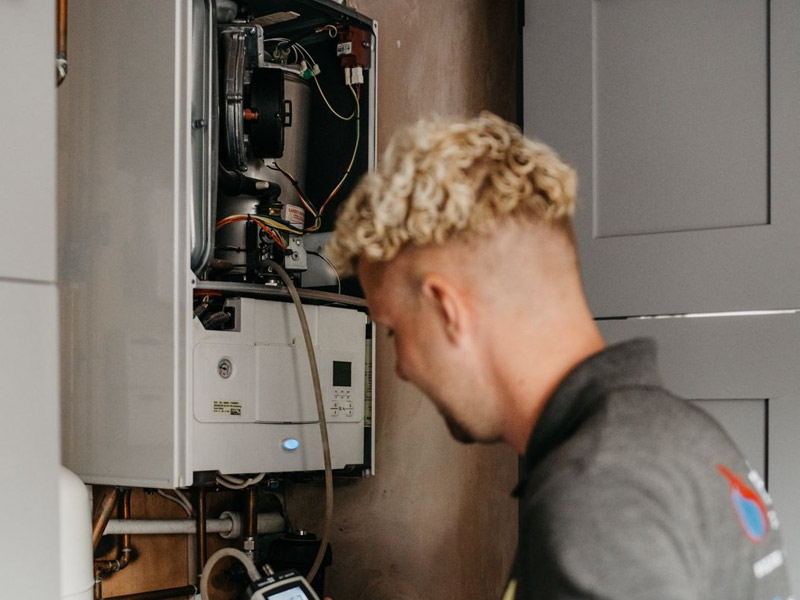
Before starting work, our engineer will assess the heating system and discuss any known problems with you.
Specialist power flushing equipment is then connected to the heating system, allowing cleaning solution and water to circulate through the radiators and pipework. Individual radiators can be worked on during the process to help dislodge stubborn deposits.
Contaminated water and loosened debris are removed from the system before it is flushed through with clean water.
Once cleaning is complete, the system is refilled and an inhibitor is added to help reduce future corrosion. The heating system can then be checked to make sure it is circulating and operating correctly.